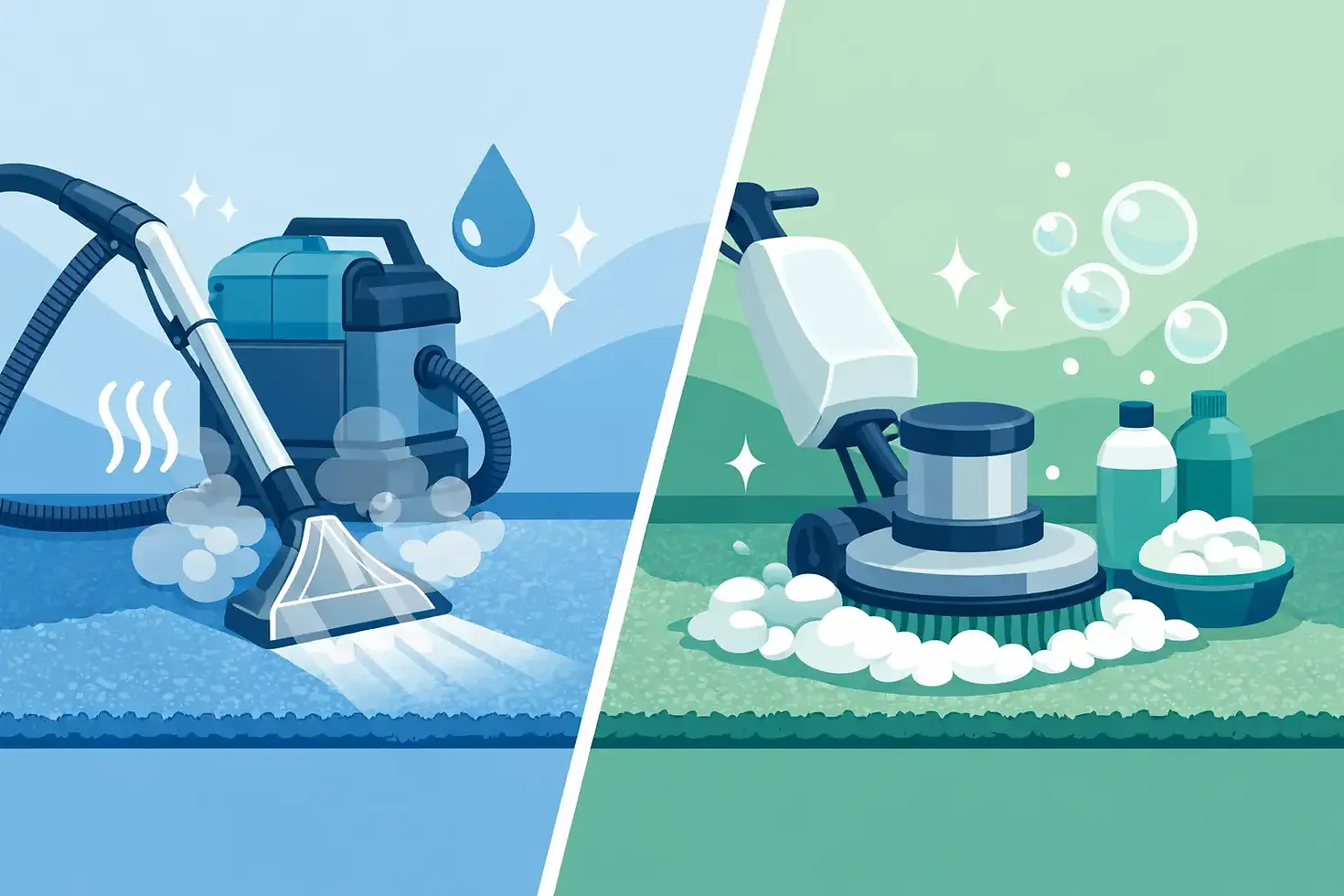
Hot Water Extraction vs Shampoo
A carpet can look clean after a shampoo and still be holding soil, residue and odours deep in the pile. That is why the question of hot water extraction vs shampoo matters more than many people realise. If you want a carpet that does not just look brighter for a few days but is properly deep cleaned, the method makes a real difference.
For homeowners, landlords and business premises alike, the main concern is usually simple. Which process gives the best result without leaving carpets too wet, sticky or vulnerable to rapid re-soiling? The short answer is that hot water extraction is generally the stronger option for deep cleaning, hygiene and overall finish. Shampoo has its place, but it is often a more surface-level treatment.
Hot water extraction vs shampoo: what is the difference?
The difference starts with how each method tackles soil. Carpet shampooing uses a cleaning solution worked into the carpet, often with a rotary or brush-based machine, to loosen dirt and lift the appearance of the fibres. In some cases, the foam captures soil and is then vacuumed away after drying. It can improve the look of a carpet, especially where appearance is the main concern.
Hot water extraction works more thoroughly. A pre-treatment is applied to break down soil, oils and spotting, then hot water and solution are injected into the carpet under pressure and extracted back out with powerful suction. That rinse-and-recover process is what sets it apart. Rather than moving dirt around the fibres, it is designed to flush contamination out of the carpet.
That matters in busy homes, rental properties and commercial settings where carpets collect far more than visible dust. Foot traffic brings in grit, bacteria, food residue, spills, pet mess and allergens. If the cleaning method leaves much of that behind, the carpet may still smell flat, feel tacky or become dirty again very quickly.
Why hot water extraction is usually the better deep clean
When clients ask for professional carpet cleaning, they are rarely looking for a cosmetic refresh alone. Most want stains reduced, odours dealt with and the carpet restored to a cleaner, fresher condition. This is where hot water extraction tends to outperform shampoo.
First, it removes more suspended soil from below the surface. Carpets trap dirt in the backing and lower pile, not just on top. A shampoo process can loosen that material, but unless it is properly extracted, much of it remains in place. Hot water extraction is specifically built to wash and remove that hidden build-up.
Second, it leaves less residue when carried out correctly with professional equipment. Residue is one of the main reasons carpets seem to get dirty again so soon after a clean. If detergent is left sitting in the fibres, it attracts fresh soil. A proper extraction rinse helps avoid that sticky finish.
Third, it is the more hygienic option. For households with children, pets or allergy concerns, and for workplaces where cleanliness affects staff and visitors, hygiene is not just about appearance. A deep extraction clean helps remove allergens, bacteria and trapped odours more effectively than shampoo alone.
Where shampoo cleaning can still be useful
That does not mean shampooing is always wrong. There are situations where it can still have a role. On some heavily trafficked carpets with matted pile, agitation from a shampoo machine can improve the appearance of the fibres. It may also be used as part of a wider cleaning process, particularly where a technician needs extra agitation before extraction.
There are also older carpets where expectations need to be realistic. If a carpet is already badly worn, heavily stained or carrying permanent traffic lane damage, no method will make it brand new. In those cases, shampooing may give a visual lift, but it is usually not the same as a proper restorative clean.
The issue is when shampooing is treated as a complete answer for dirt, odour and hygiene. In many properties, especially family homes and commercial buildings, that is simply not enough.
Drying times, residue and re-soiling
One of the biggest concerns people have is drying time. Some assume that because hot water extraction uses water, it must leave carpets wetter for longer. That can be true with low-powered machines or poor technique. It is far less true with professional high-powered extraction equipment.
Strong suction removes a large volume of the moisture during the cleaning process itself, which helps carpets dry in a reasonable time. Air movement, fibre type, room temperature and carpet thickness all affect the final drying period, but the idea that extraction always means soaking carpets is outdated.
Shampooed carpets can create a different problem. Even when they feel dry, they may still contain product residue. That residue can leave the carpet slightly stiff or sticky underfoot, and it often leads to rapid re-soiling. A carpet that looked good for a week can start to dull again because the remaining shampoo is attracting dirt back into the fibres.
So when comparing hot water extraction vs shampoo, drying time should not be judged on water use alone. The quality of the equipment and the skill of the operator matter just as much.
Which method is safer for your carpet?
Most modern carpets respond very well to hot water extraction when assessed and cleaned properly. A trained professional will consider fibre type, construction, condition, staining and colour fastness before starting. That care is important because not every carpet should be treated the same way.
Shampooing can sometimes be rougher on certain fibres because of the brushing and mechanical agitation involved. If a carpet is delicate, already worn or prone to pile distortion, too much agitation can leave it looking fuzzy or uneven. Extraction is not risk-free either, but when carried out correctly it is often the more controlled option.
This is why professional assessment matters. The right question is not just which method sounds best in theory. It is which method is suitable for your specific carpet and the problem you are trying to solve.
Hot water extraction vs shampoo for landlords and commercial sites
For landlords, tenants at the end of a tenancy and commercial property managers, results need to stand up to inspection. A quick surface clean is rarely enough where odours, staining or heavy traffic are involved.
In rental properties, extraction is often the stronger choice because it deals better with built-up soil, cooking smells, pet odours and general occupancy grime. It also helps present the property as properly cleaned rather than simply freshened up.
In offices, waiting areas, schools and other customer-facing spaces, appearance matters, but so does hygiene. Staff and visitors notice odours, dingy traffic lanes and stained walkways immediately. A deep extraction clean usually produces the clearer before-and-after improvement people want to see.
For businesses, there is also the practical question of maintenance. A carpet that is cleaned properly and left with minimal residue tends to stay presentable for longer. That supports a better cleaning cycle and protects the flooring investment over time.
Why professional equipment changes the result
The same cleaning method can produce very different outcomes depending on the machinery behind it. Consumer rental machines and lower-powered systems often lack the heat, suction and rinse performance needed for a proper deep clean. They may leave carpets overwet or fail to recover enough soil.
Professional hot water extraction equipment is designed to clean deeper and recover more moisture in the same pass. That is a major reason why results are often stronger, drying times are better and the carpet feels cleaner afterwards rather than just damp and scented.
At JK Carpet Clean, we use professional-grade hot water extraction to deliver the kind of deep clean most households and businesses are actually looking for - not just an improved appearance, but cleaner fibres, reduced odours and a fresher, healthier finish.
So which should you choose?
If your aim is genuine deep cleaning, hot water extraction is usually the right answer. It removes more dirt, leaves less residue and gives a more hygienic result. For homes with pets or children, rental properties between occupants, and commercial areas that need to look and feel properly clean, it is generally the better investment.
Shampooing may still help in limited cases, particularly as an appearance treatment or supporting step, but it is not usually the best standalone method where hygiene, odour removal and long-term cleanliness matter.
The best carpet cleaning is not about the loudest claim or the quickest pass over the surface. It is about using the right process, the right equipment and the right judgement for the carpet in front of you. When that happens, the difference is not subtle - you can see it, feel it and smell it long after the job is done.


Comments